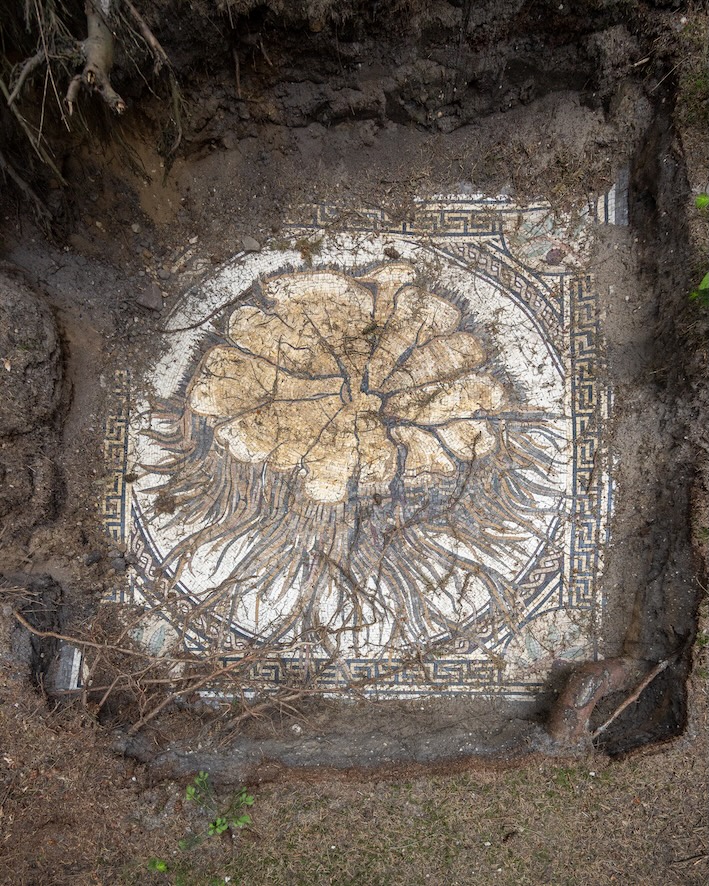
A site-specific mosaic installation at Landgoed De Paltz
200x200cm
2026
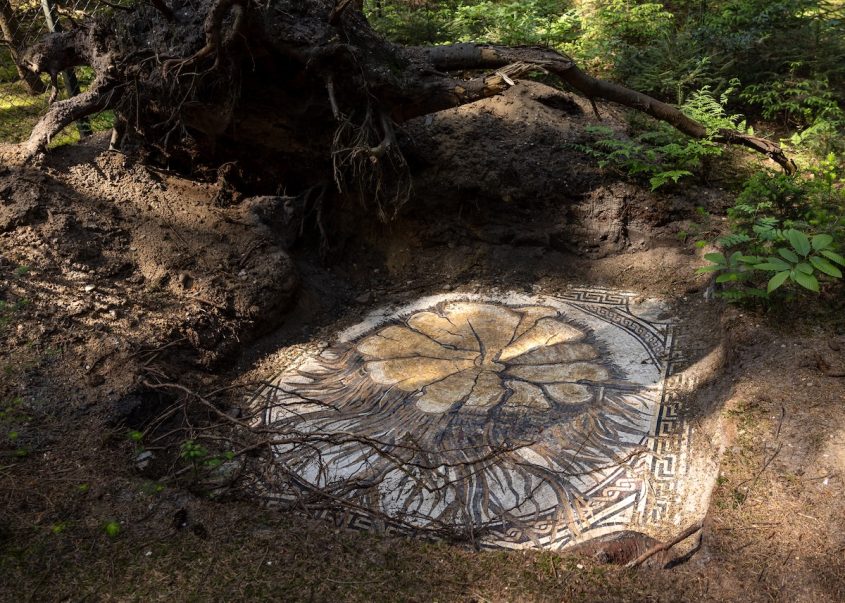
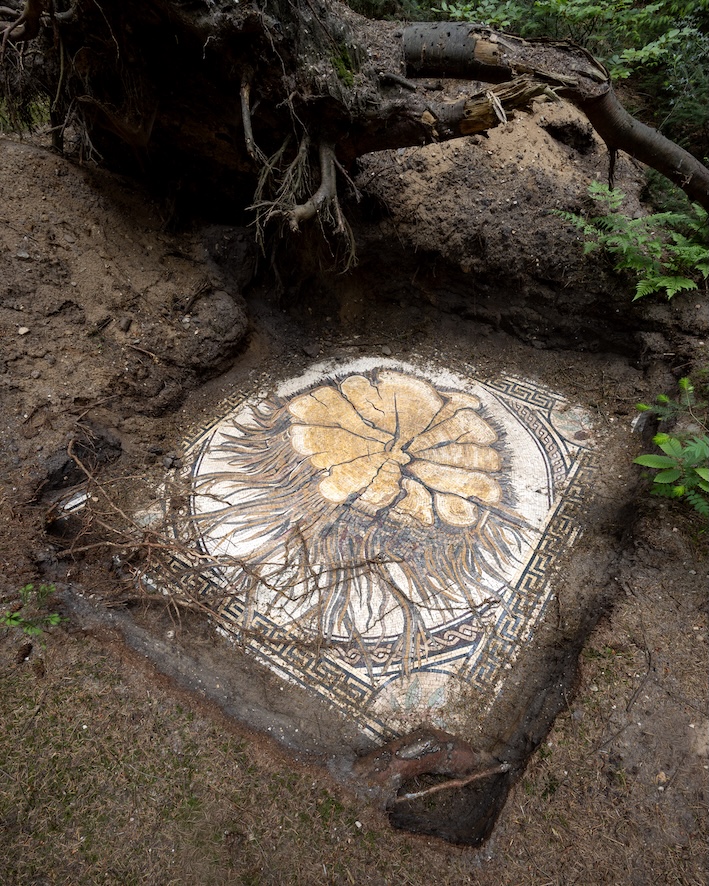
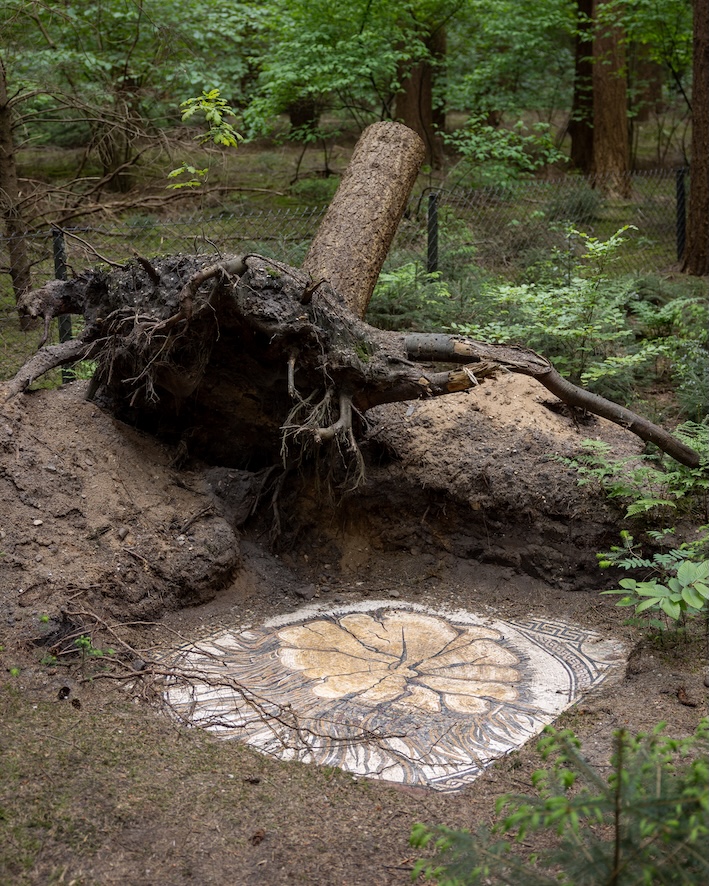
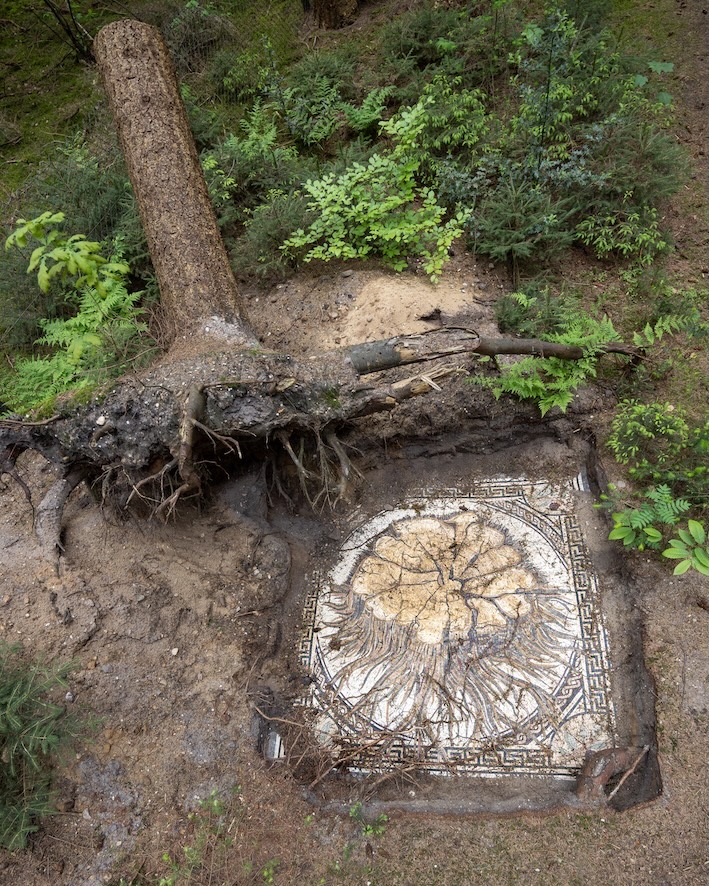
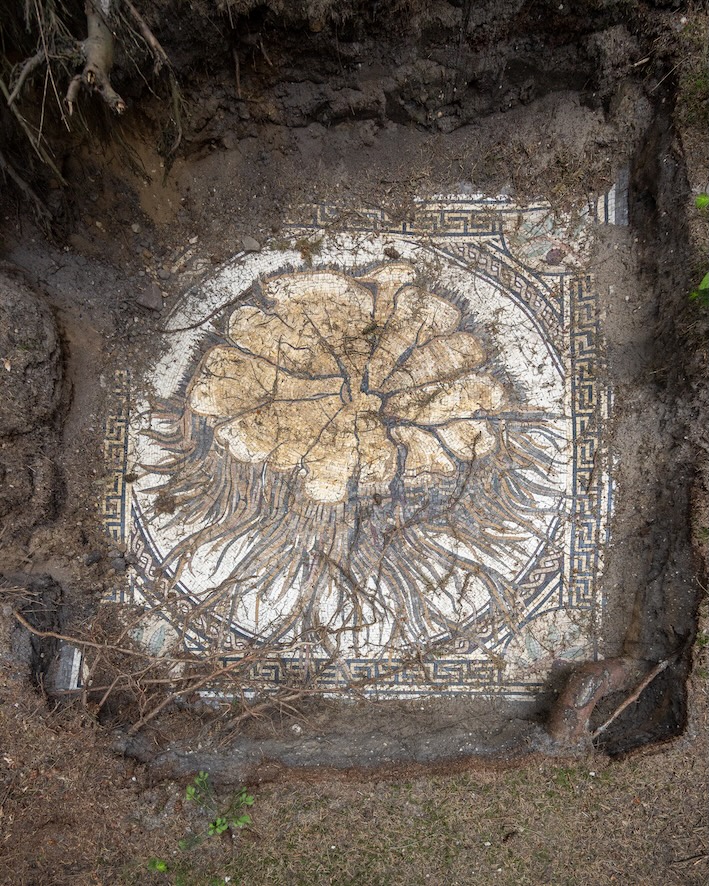
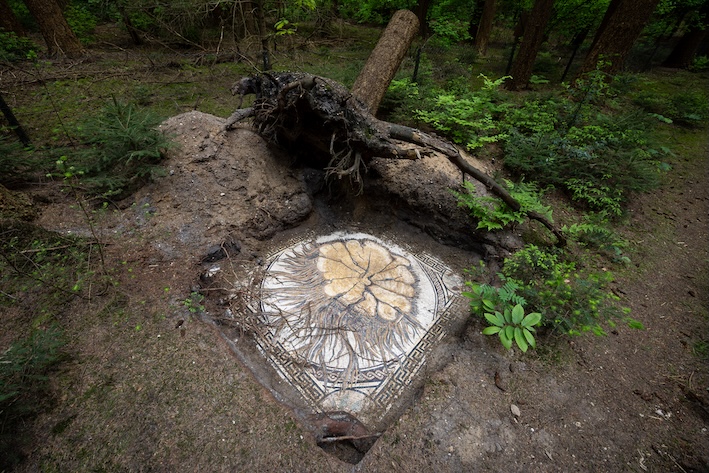
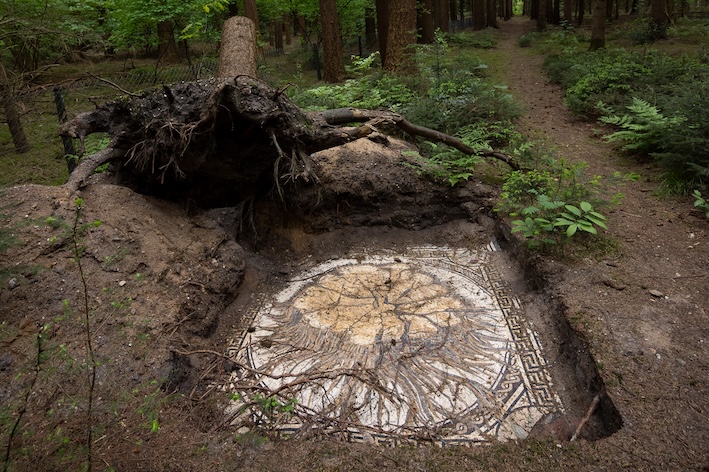
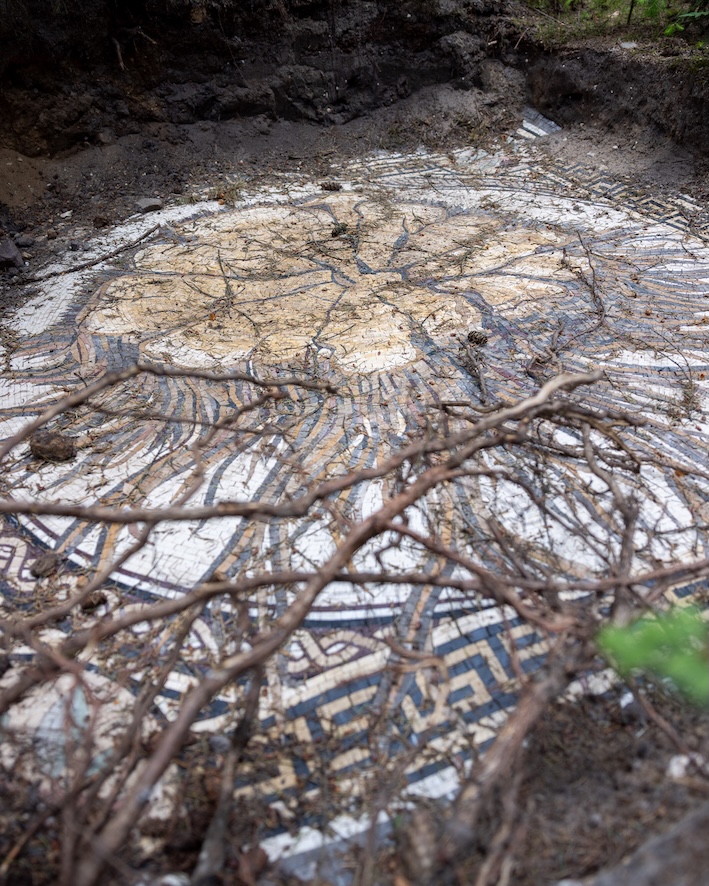
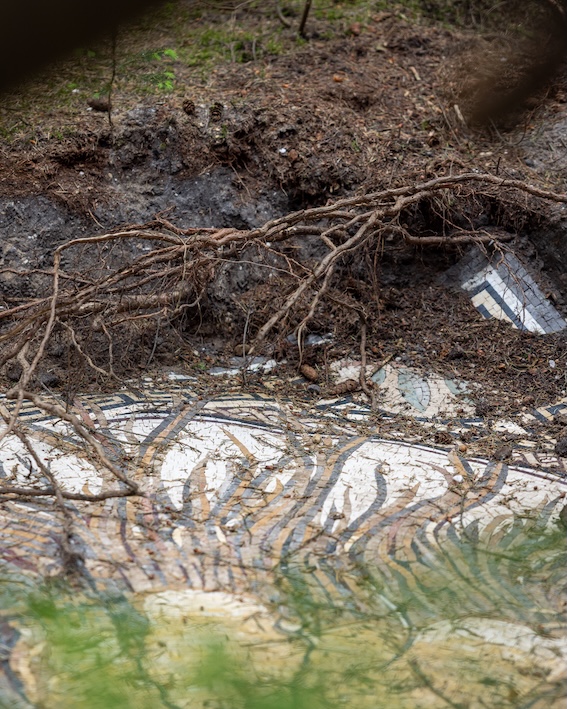
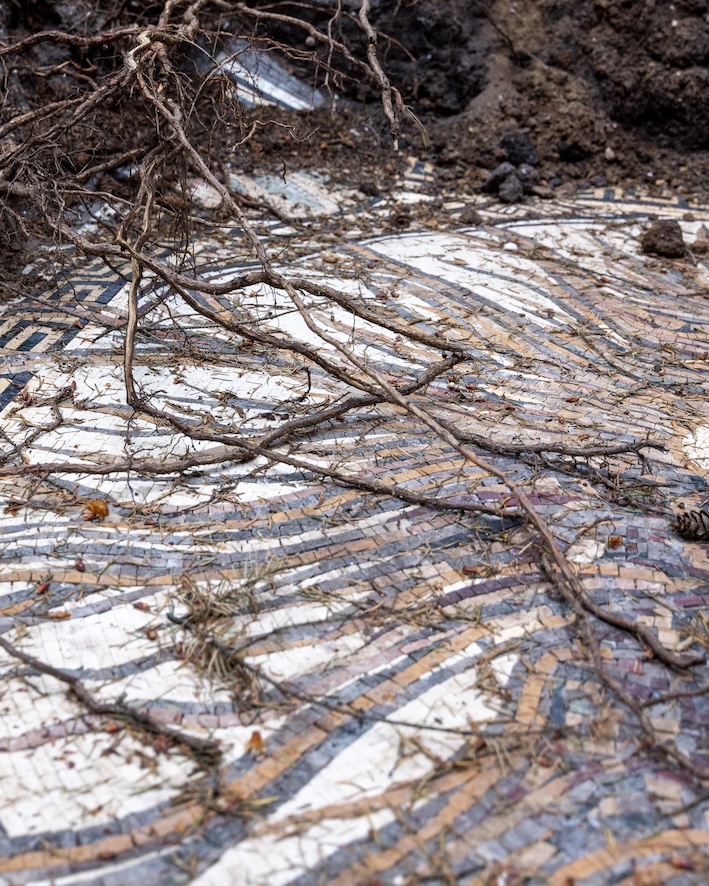
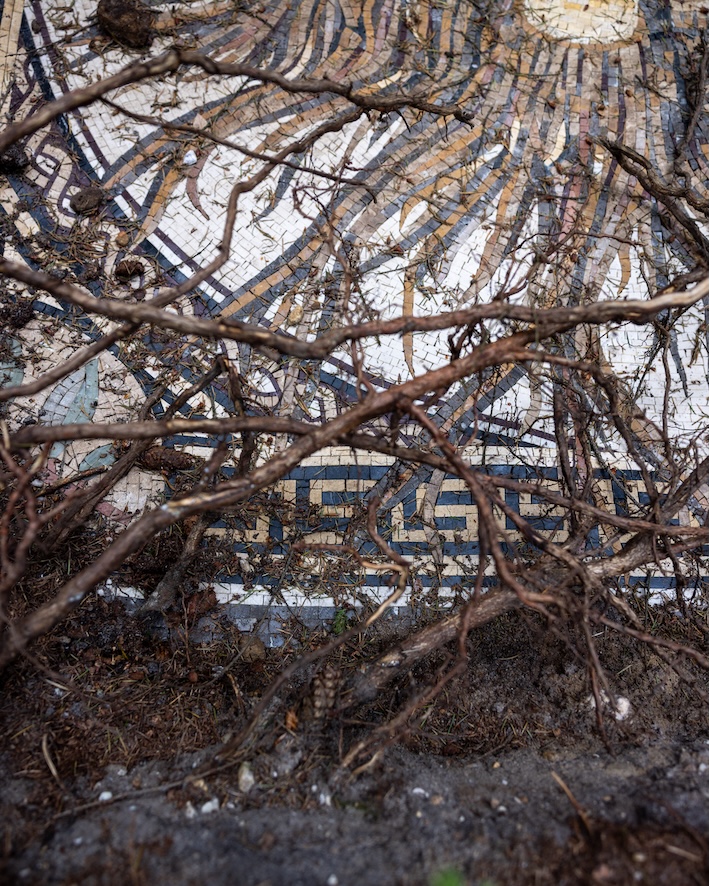
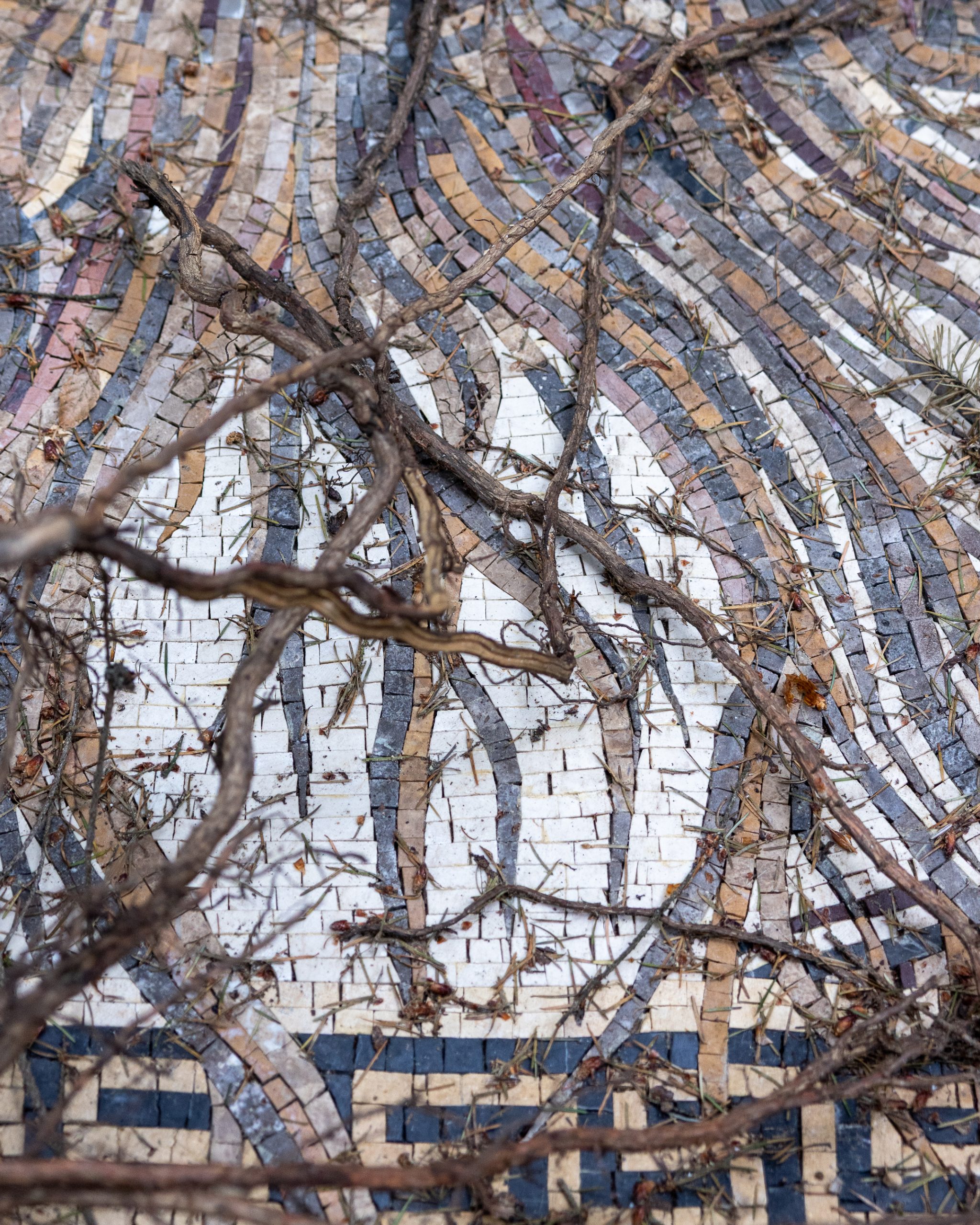
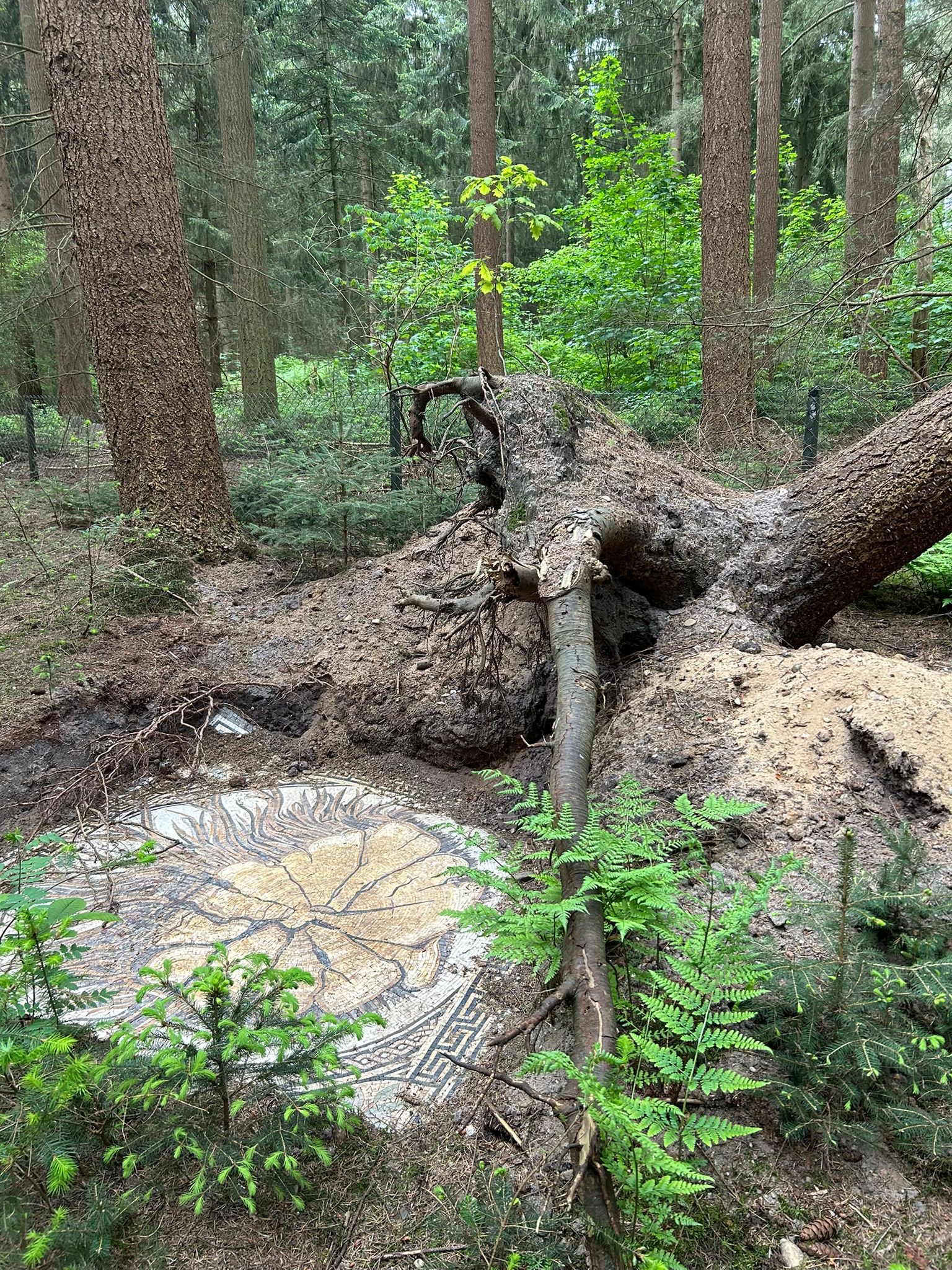
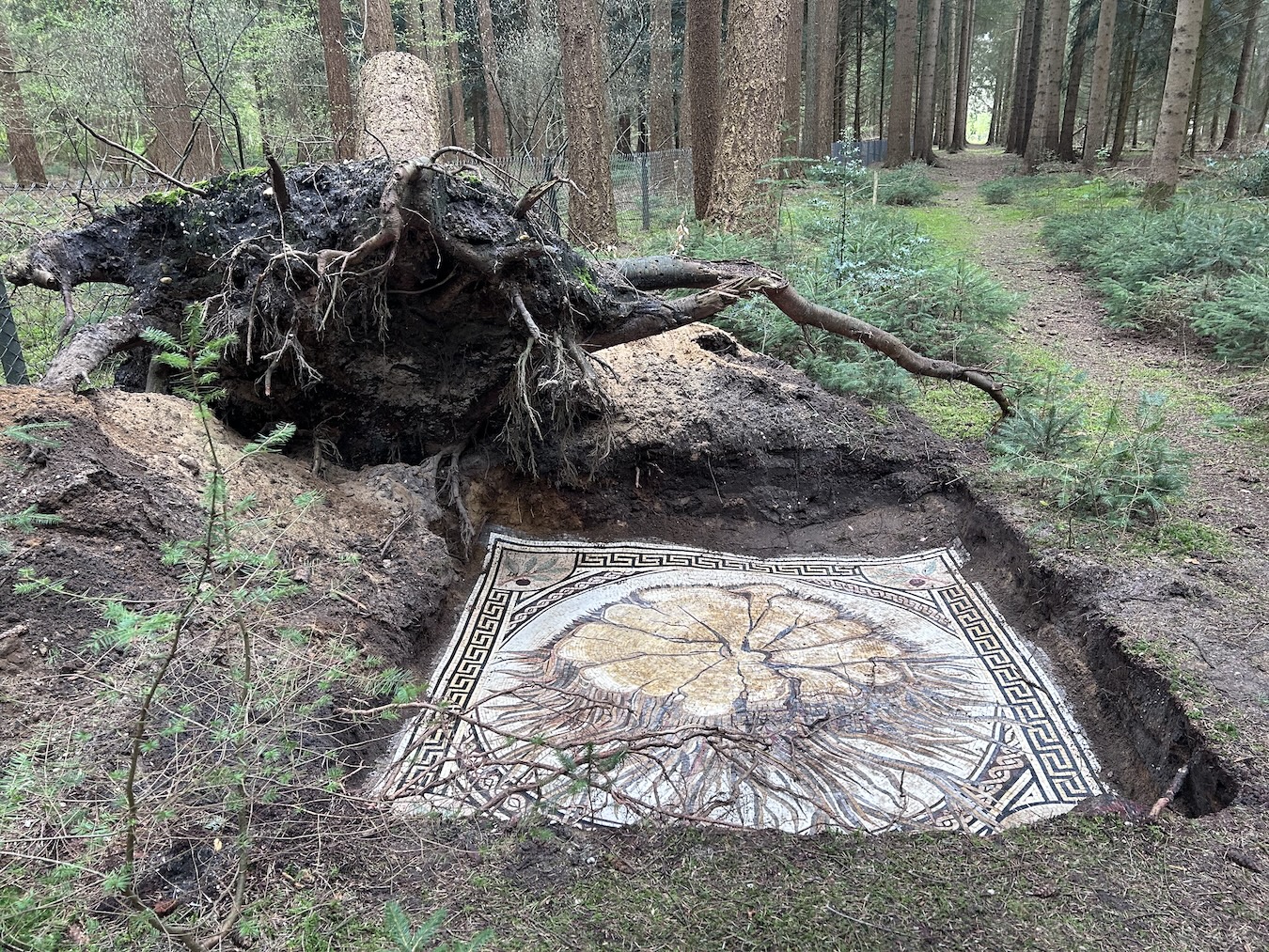
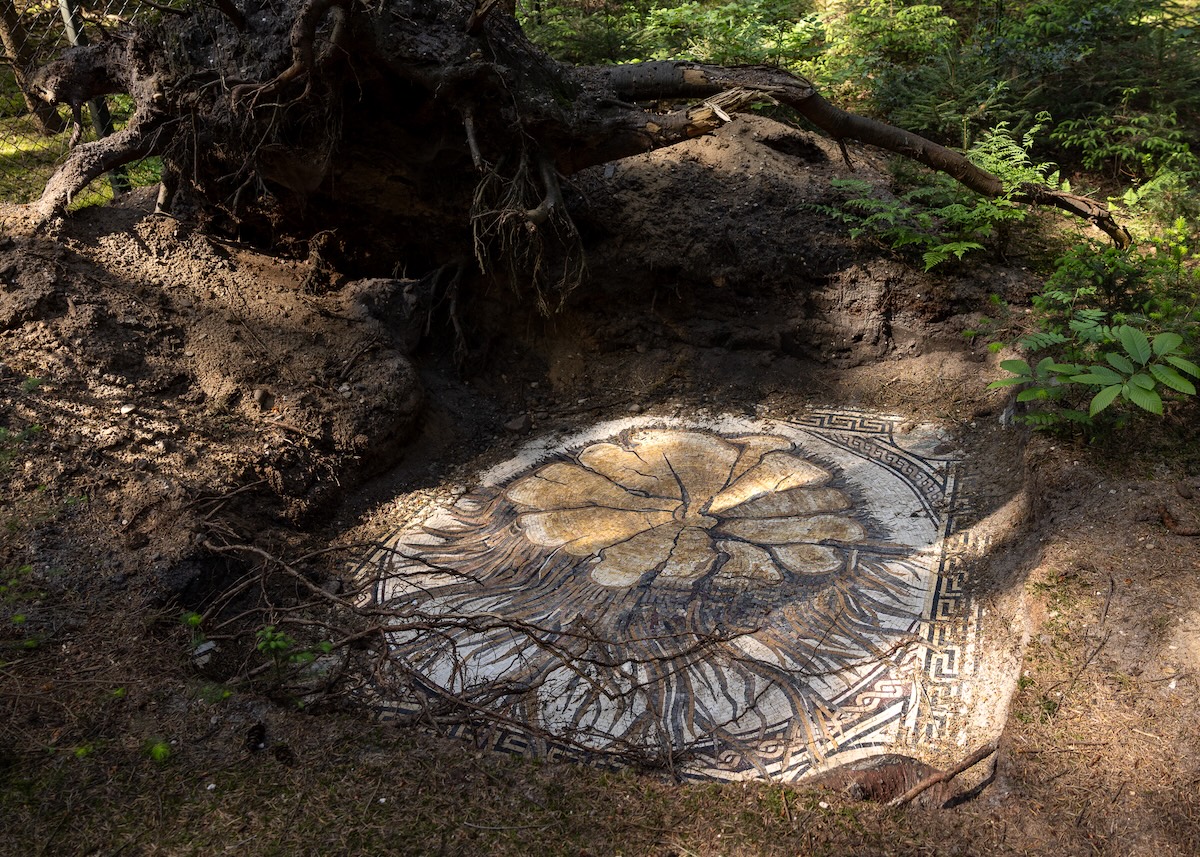
Anatomy of Belonging began with a news story about a farmer in Gaza whose olive trees could not grow because an ancient Byzantine mosaic beneath the soil prevented their roots from taking hold. This encounter, where cultural heritage and organic life came into friction, became the conceptual starting point for the work. In the wake of the destruction in Gaza, the story has gained an added urgency, turning the mosaic into a metaphor for the fragile entanglement of land, memory, and erasure.
Developed for the Paltz Biennale in Soest, the project responds to the designed landscape of De Paltz by shifting attention from what is visible above ground to the hidden systems beneath it. Root structures and fungal networks become metaphors for diasporic existence: forms of life that adapt, connect, and survive while remaining shaped by their origins. At the center of the work is the olive tree, a species deeply tied to Mediterranean geographies and cultural memory, here reimagined as a displaced presence attempting to root itself in unfamiliar soil.
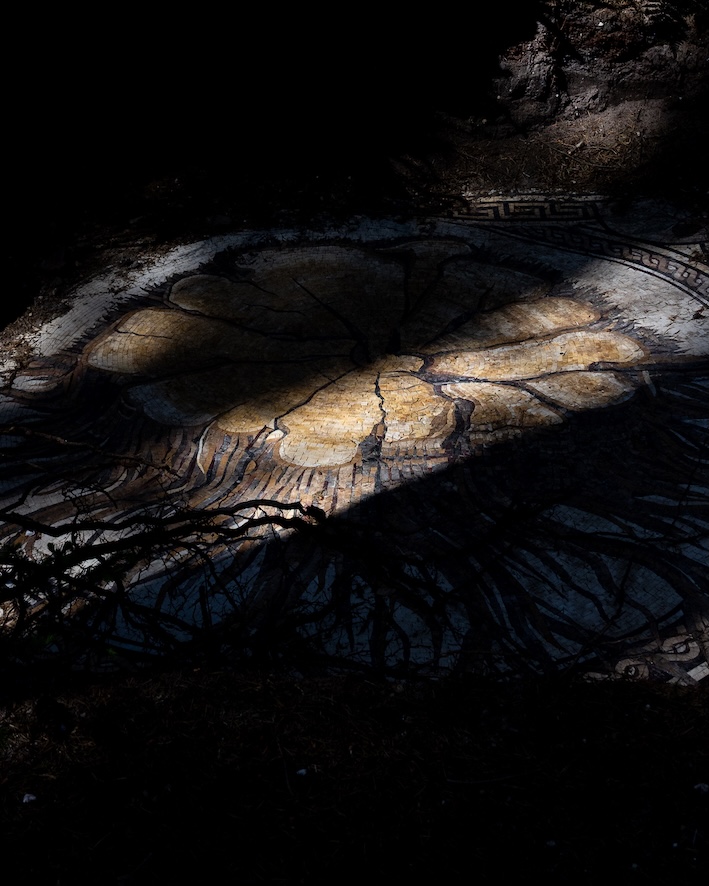
The installation materialises as a mosaic buried beneath the earth, depicting a hybrid anatomy that merges olive roots with fungal networks into a single symbolic structure. Produced in collaboration with Syrian mosaic artisan Abdurrahman Hamid, the work draws on traditional techniques and natural stone to embed layered histories within its form. Remaining largely invisible, Anatomy of Belonging invites visitors into a quiet process of discovery, where belonging emerges not as something fixed, but as a fragile and ongoing negotiation between memory, displacement, and connection.
Photo credits: Robin Meyer